Magene Outdoor/Indoor Speed/Cadence Sensor review 2026: this is a focused choice for riders who want a compact sensor that can support either speed or cadence tracking.
It makes the most sense if you value simple compatibility with bike apps, trainers, and head units over advanced metrics.
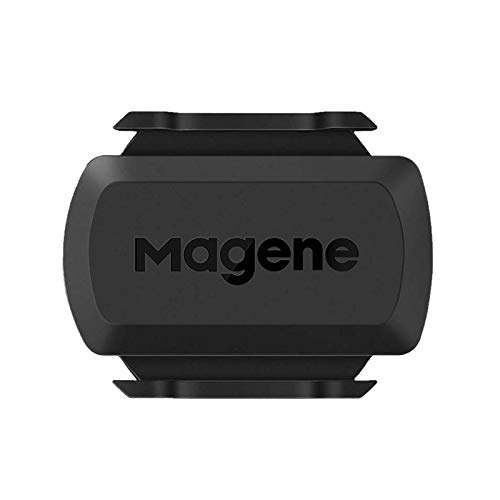
Magene Outdoor/Indoor Speed/Cadence Sensor Review Summary
If you need one small sensor that can be used for either speed or cadence, the Magene outdoor/indoor sensor is a sensible buy.
It fits riders who want a straightforward training accessory for road bikes, spinning bikes, or trainer setups, especially when Bluetooth and ANT+ flexibility matters.
The main tradeoff is that it is not a do-everything sensor in one unit.
The listing is explicit that one sensor can select only one mode at a time, so riders who want both speed and cadence simultaneously need two sensors.
That is not a flaw if you already know what you need, but it is important for buyers comparing it to more bundled systems.
Review Scorecard
| Category | Score | Rationale |
|---|---|---|
| Compatibility | 8/10 | Supports Bluetooth and ANT+, which helps it fit many bike apps, trainers, and computers. |
| Ease of Setup | 7/10 | The listing gives clear pairing guidance, but the mode switch and app pairing rules add a little friction. |
| Flexibility | 8/10 | Works as either a speed sensor or cadence sensor, and can be used indoors or outdoors. |
| Value for Purpose | 8/10 | Strong for riders who need one basic sensor function with broad protocol support. |
| Power Management | 7/10 | The automatic sleep behavior is useful, though wake-up behavior means you need to pay attention before use. |
| Multi-Device Use | 7/10 | ANT+ can broadcast to multiple devices at once, while Bluetooth is limited to one app or device at a time. |
| Buyer Clarity | 6/10 | Good if you understand the mode limitations, less ideal if you expect a single sensor to do everything. |
Key Features and Specifications of Magene Outdoor/Indoor Speed/Cadence Sensor
The core appeal of the Magene sensor is its simple, dual-use design.
The listing describes it as an outdoor/indoor speed and cadence sensor for cycling, and it is intended for road bikes, spinning bikes, and trainers.
The most important functional detail is mode selection.
A single sensor can only run in one mode at a time, either speed or cadence.
If you want both measurements simultaneously, you need two sensors, one assigned to each job.
It supports both Bluetooth and ANT+ protocols.
That matters because the listing says Bluetooth can connect to only one app or device at a time, while ANT+ can broadcast to multiple devices concurrently.
For riders using a head unit plus a trainer or secondary app, that protocol split is a real practical benefit.
The listing also notes that smartphone pairing should be done inside the app, not through the phone’s general Bluetooth settings.
That is a common compatibility detail, but it is worth calling out because it affects first-time setup.
The sensor ships with a pre-installed battery, and the insulating sheet must be removed before use.
The listing also says the battery needs to be reinstalled to switch between speed and cadence mode.
In other words, this is not a set-it-and-forget-it device if you plan to reassign it often.
The sensor enters sleep mode after about one minute of being stationary to save power.
It only resumes broadcasting after it is properly woken up, so riders should expect a small pre-ride routine rather than instant background activity.
Pros and Cons of Magene Outdoor/Indoor Speed/Cadence Sensor
Pros
- Flexible protocol support with both Bluetooth and ANT+.
- Works indoors and outdoors for bikes, spinning setups, and trainers.
- Simple purpose-built design if you only need speed or cadence.
- ANT+ multi-device broadcasting is useful for training ecosystems.
- Automatic sleep behavior helps reduce wasted power.
Cons
- One sensor equals one mode at a time, so dual tracking needs two units.
- Bluetooth device limits can be restrictive if you use multiple apps.
- Setup details matter, especially the app-based pairing flow.
- Mode switching is not seamless, since the battery must be reinstalled to change use.
Who Should Buy Magene Outdoor/Indoor Speed/Cadence Sensor?
This is a good fit for riders who want a basic cycling sensor with broad app and head-unit compatibility.
If you use one app, one trainer, or one cycling computer and only need speed or cadence, the Magene sensor is a practical choice.
It also makes sense for indoor riders who want an easy way to add cadence data to a spinning bike or trainer session, or for outdoor riders who want a compact speed sensor for a road bike setup.
You should probably skip it if you want one accessory to handle both speed and cadence at once.
You should also look elsewhere if you prefer a very hands-off product experience and do not want to think about pairing rules, mode changes, or wake-up behavior.
Using the Magene Sensor in Real Training Setups
Indoor Trainer Use
For indoor sessions, the sensor’s dual-protocol support is the strongest argument in its favor.
ANT+ is especially useful when you want data available to more than one device, while Bluetooth is fine for a single-app setup.
Outdoor Road Bike Use
On a road bike, the Magene sensor is best understood as a compact utility tool.
It is not trying to be a premium all-in-one computer; it is trying to provide the specific metric you choose, with enough compatibility to plug into common ecosystems.
Cadence Versus Speed Choice
The biggest planning decision is whether you need cadence or speed more urgently.
Because the unit only does one mode at a time, buyers should choose the measurement that actually supports their training plan instead of assuming they can cover both with one purchase.
Pairing and Wake Behavior
The listing’s pairing instructions and sleep behavior make this a device that rewards a little care at first use.
Once set up correctly, the operating model is straightforward, but it is not designed to disappear into the background without any attention.
Alternatives to Magene Outdoor/Indoor Speed/Cadence Sensor
If you want a different approach, common alternatives include the Wahoo RPM Speed Sensor, the Garmin Speed Sensor 2, and the CooSpo speed cadence sensor.
Those are reasonable comparison points for buyers who want similar cycling data with different ecosystem preferences.
If you want both speed and cadence from a single brand family, look at broader Garmin cadence sensor and Wahoo cadence sensor options as well.
The right comparison depends on whether you care more about a dedicated speed sensor, a dedicated cadence sensor, or a combination setup.
Is Magene Outdoor/Indoor Speed/Cadence Sensor Worth It?
Yes, if you want a simple cycling sensor that fits a practical indoor or outdoor setup and you understand the mode limitations.
The Magene outdoor/indoor speed/cadence sensor is worth considering for riders who need reliable protocol compatibility and do not mind using one sensor per metric.
It is less compelling if you expected a single unit to cover both speed and cadence at the same time.
For the right buyer, though, it is a focused, sensible solution that does its job without unnecessary complexity.