Manual treadmills with heart rate monitors give home exercisers a practical way to combine incline walking, steady cardio, and workout tracking without relying on a full commercial gym setup.
We compared 10 options across incline range, belt size, portability, capacity, display features, and heart-rate tracking to help you choose a treadmill that fits your space and training goals.
Best 10 Manual Treadmills with Heart Rate Monitors Picks for 2026
Best All-Around Incline Option
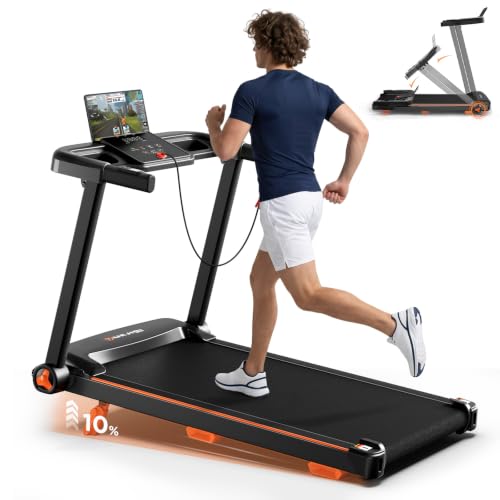
- 10% manual incline and speeds up to 8.5 MPH
- Hand-pulse heart rate sensors and Bluetooth
- Foldable frame with 300-pound capacity
Best For: Walkers, joggers, and families wanting versatile home cardio
Best for Higher Weight Capacity

- Supports users up to 400 pounds
- 10% manual incline with three settings
- Handrail pulse sensor, app support, and assisted folding
Best For: Larger users wanting cushioned, connected home workouts
Best Budget-Friendly Compact Choice

- LCD heart-rate tracking and four-level manual incline
- 39.3 x 15.7-inch belt with 12 preset programs
- Hydraulic folding design and Bluetooth connectivity
Best For: Casual walkers and apartment users needing compact cardio equipment
Best Compact Heart-Rate Option
Folding Walking Pad with Manual Incline
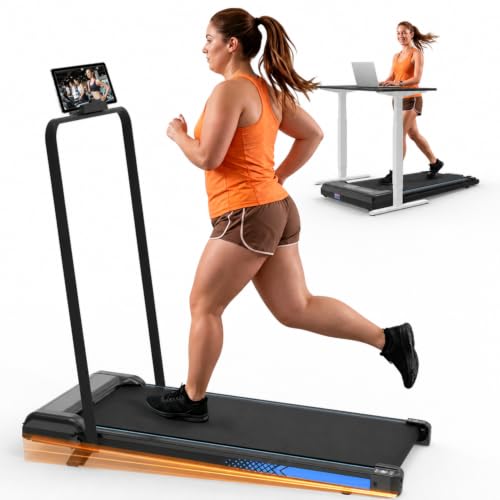
- Heart-rate monitoring and metrics tracking
- Foldable 33-pound compact design
- Cushioned belt, speaker, Bluetooth, and handlebar
Best For: Compact home or office walking with heart-rate tracking
Best Overall Heart-Rate Tracking
YUEJIQI 3220S Heart-Rate Treadmill

- Pulse sensors integrated into the handrails
- 15% auto incline and 8.5 MPH maximum speed
- 42-by-16-inch belt with app and Bluetooth support
Best For: Runners wanting heart-rate tracking and automatic incline control
Best Budget Incline Pick

- 12% manual incline with 12 workout programs
- Handrail heart-rate monitoring and LED metrics
- Folding design with Bluetooth speaker
Best For: Compact home walking and jogging workouts
Best Heavy-Duty Upgrade

- 18% automatic incline and up to 8.7 MPH
- Heart-rate and workout-metric display
- Wide belt with 350-pound listed capacity
Best For: Stable, app-connected hill training at home
Best Manual-Incline Runner

- Three manual incline settings up to 6%
- Handrail pulse sensors and 18-inch display
- Up to 9 MPH with 300-pound capacity
Best For: Manual-incline walking, jogging, and running
Best All-Around Incline Option – 3.0 HP Folding Treadmill
For shoppers comparing manual treadmills with heart rate monitors, this model combines a 10% manual incline with a 0.8–8.5 MPH speed range. Its folding frame, hand-pulse sensors, 300-pound capacity, and Bluetooth support make it a versatile choice for home cardio.
Best For: Walkers, joggers, and families wanting a foldable treadmill with incline variety and basic pulse tracking.
Pros:
- 10% manual incline adds hill-focused challenge without requiring faster speeds.
- 3 HP brushless motor supports walking, jogging, and running up to 8.5 MPH.
- Foldable design, 300-pound capacity, cushioning, and 12 preset programs suit shared home use.
Cons:
- The 42 x 16-inch deck is more compact than many dedicated running treadmills.
- Heart rate readings require holding the handrail sensors.
This is a balanced option for households that want more than a basic walking pad, especially if incline workouts, folding storage, and app connectivity matter.
Best Compact High-Incline Pick – 16% Incline Walking Pad
This compact treadmill stands out among manual treadmills with heart rate monitors for its 16% manually adjusted incline. It starts at 0.6 MPH, folds for storage, and includes padded handrails, making it geared more toward walking and light jogging than fast running.
Best For: Beginners, seniors, office users, and apartment dwellers who prioritize incline walking and easy storage.
Pros:
- 16% manual incline provides the highest hill setting in this roundup.
- Long padded handrails and a low starting speed support controlled walking workouts.
- Foldable 46.9-inch frame, 330-pound capacity, and seven-layer cushioning suit compact spaces.
Cons:
- The maximum speed is 6.3 MPH, limiting faster running workouts.
- The supplied specifications list speed, time, distance, and calories, but not heart rate tracking.
Choose this model if incline walking and compact storage are more important than heart-rate monitoring or a high running speed; verify the monitoring features before purchase if pulse tracking is essential.
Best for Higher Weight Capacity – Cardirun 400-LB Treadmill
Among manual treadmills with heart rate monitors, the Cardirun pairs a 400-pound capacity with a 10% manual incline and a brushless motor rated for quiet operation under 45 dB. Its pulse-sensing handrail, app compatibility, and assisted folding design add useful everyday features.
Best For: Larger users and households seeking a cushioned, foldable treadmill with manual incline and handrail pulse readings.
Pros:
- 400-pound maximum weight recommendation is the highest listed among these products.
- Three manual incline levels—0%, 3%, and 10%—allow simple intensity changes.
- Console displays pulse, and the treadmill includes 12 programs, app support, cushioning, and hydraulic folding assistance.
Cons:
- The top speed is 7.6 MPH, so it is less suited to high-speed running.
- The supplied notes do not provide complete folded dimensions.
The Cardirun is a strong fit when capacity and comfort take priority. Its handrail pulse sensor directly addresses heart-rate tracking, while the quiet motor and transport wheels make it practical for home or office use.
Best Budget-Friendly Compact Choice – SereneLife Folding Treadmill
The SereneLife is a compact option for shoppers seeking manual treadmills with heart rate monitors and straightforward home controls. It offers a four-level manual incline, a 6 MPH maximum speed, a wide 39.3 x 15.7-inch belt, and Bluetooth connectivity in a foldable frame.
Best For: Apartment users and casual walkers who want preset programs, basic heart-rate tracking, and compact storage.
Pros:
- LCD display tracks speed, time, distance, calories, and heart rate.
- Four-level manual incline and 12 preset modes provide workout variety.
- Hydraulic folding system, Bluetooth, and a 265-pound capacity suit everyday home use.
Cons:
- The 1 HP motor and 6 MPH top speed are better suited to walking and light jogging than serious running.
- The maximum incline is 4%, lower than the other listed incline models.
This treadmill makes sense for users who want essential incline and pulse-monitoring features without a larger running machine. Its compact dimensions and Bluetooth support are particularly useful in apartments.
Best High-Incline Value – CURSOR FITNESS 16% Incline Treadmill
For shoppers comparing manual treadmills with heart rate monitors, the CURSOR FITNESS offers a compact, foldable design and a demanding manual incline setup. Its three incline levels—0%, 8%, and 16%—let you add hill work without relying on powered incline adjustment.
Best For: Home walkers, joggers, and climbers who want high-intensity incline training in a space-saving treadmill.
Pros:
- 16% maximum manual incline supports more challenging walking and climbing workouts.
- Three LED displays show speed, time, distance, and calories.
- 400-pound recommended capacity and a seven-layer belt with four shock absorbers.
- Folded dimensions allow storage under a bed, sofa, or in a narrow corner.
Cons:
- The incline is manual rather than automatically adjustable.
- The 37.5-by-15-inch belt is narrower than the running surface on some full-size treadmills.
- The supplied details do not list a heart-rate monitor.
This model stands out for its unusually steep manual incline, sturdy stated capacity, and low-noise brushless motor. It is a practical choice if incline intensity and compact storage matter more than connected heart-rate tracking.
Best Compact Heart-Rate Option – Folding Walking Pad with Manual Incline
If you are specifically searching for manual treadmills with heart rate monitors, this foldable walking pad combines heart-rate metrics with a manual incline and office-friendly features. Its compact footprint, speaker, Bluetooth connectivity, and low-noise motor suit lighter daily workouts.
Best For: Adults, seniors, and office users who want gentle walking, light jogging, and heart-rate tracking in a compact space.
Pros:
- Heart rate is among the listed measured metrics, with a heart-rate monitor highlighted in the product details.
- Manual incline options are listed up to 15%, adding intensity to walking workouts.
- Folded dimensions are compact, and the 33-pound listed weight supports easier repositioning.
- Seven-layer cushioning and a safety handlebar support lower-impact exercise.
Cons:
- The supplied bullet points describe a 7% incline, while the specifications list a 15% maximum, so buyers should confirm the exact adjustment range.
- The 250-pound capacity stated in the bullets conflicts with the 350-pound specification.
- Its 36-by-15-inch belt is geared more toward walking and light running than long-stride running.
This is the most directly aligned option for shoppers who want manual incline functionality alongside heart-rate monitoring and compact storage. Verify the capacity and incline specifications before purchase because the supplied listing details are inconsistent.
Best Overall Heart-Rate Tracking – YUEJIQI 3220S Heart-Rate Treadmill
Among manual treadmills with heart rate monitors, the YUEJIQI 3220S offers the most substantial running platform and a built-in pulse-monitoring handrail. Although its incline is motorized rather than manual, the 0%–15% adjustment, 8.5 MPH top speed, and app connectivity make it a versatile home-training option.
Best For: Users who want heart-rate tracking, faster running speeds, a wider belt, and automatic incline control.
Pros:
- Integrated handrail heart-rate sensors provide real-time monitoring.
- Wide 42-by-16-inch running belt supports walking, jogging, and running.
- 0%–15% auto incline and 8.5 MPH maximum speed accommodate varied workouts.
- Quiet 3.5HP brushless motor, Bluetooth, app support, and 12 preset programs add versatility.
Cons:
- The incline is automatic, so it does not meet a strict preference for manual incline adjustment.
- At 68 pounds, it is heavier than the compact walking-pad options.
- The stated maximum user weight is 300 pounds, and the warranty is listed as one year.
The 3220S is the strongest choice here for users who value heart-rate monitoring and a more capable running experience. Choose it over a true manual-incline model if automatic incline changes, app connectivity, and a wider deck are higher priorities.
Best Budget Incline Pick – 3-in-1 Foldable Treadmill
If you want manual treadmills with heart rate monitors for home walking, jogging, and light running, this 3-in-1 model combines a manual incline with a compact folding design. Its handrail heart-rate monitoring, 12 programs, and speeds up to 7.5 MPH provide useful workout variety.
Best For: Home users seeking an affordable, space-saving treadmill with manual incline training and basic heart-rate tracking.
Pros:
- Handrail heart-rate monitoring and an LED display track key workout metrics.
- Manual incline reaches 12% for more demanding walking and jogging sessions.
- Folding frame, Bluetooth connectivity, speaker, and 300-pound listed capacity support convenient home use.
Cons:
- The 14.96-by-37.4-inch belt is relatively compact for running.
- Incline adjustment is manual rather than automatic.
- The supplied specifications list different maximum weight figures, so buyers should verify the current rating.
This is a practical choice when portability, incline capability, and heart-rate feedback matter more than a long running deck or automated incline controls.
Best Heavy-Duty Upgrade – MERACH Auto-Incline Treadmill
Although it is not a manual-incline model, this MERACH treadmill is a strong alternative for shoppers comparing manual treadmills with heart rate monitors and wanting more automation. It combines heart-rate readouts with an 18% auto incline, a wide belt, app control, and a 350-pound capacity.
Best For: Users who want a sturdier treadmill with automated hill training, app features, and a spacious running surface.
Pros:
- Heart rate, speed, time, distance, calories, and incline appear on the LED display.
- 18% auto incline and speeds up to 8.7 MPH support varied workouts.
- Wide 18-by-47-inch belt, shock absorption, and a listed 350-pound capacity provide a stable training platform.
- Hydraulic folding and MERACH app compatibility add convenience.
Cons:
- It is heavier and larger than more compact folding models.
- Its incline is automatic, so it does not match a strict manual-incline preference.
- The supplied title lists multiple belt and speed configurations, so buyers should confirm the exact version.
Choose this model if durability, belt width, and automated incline control are higher priorities than the simplicity and lower weight of a manual treadmill.
Best Manual-Incline Runner – THERUN Incline Treadmill
For shoppers specifically seeking manual treadmills with heart rate monitors, the THERUN TR07 offers three manual incline settings, integrated handrail pulse sensors, and a top speed of 9 MPH. Its 18-inch display and 15 preset programs make it suitable for structured indoor workouts.
Best For: Walkers and runners who want a manual-incline treadmill with faster running speeds and built-in pulse sensors.
Pros:
- Handrail pulse sensors monitor heart rate during workouts.
- Three manual incline settings provide straightforward intensity adjustments.
- Up to 9 MPH, a 43.3-by-16.5-inch belt, and 300-pound capacity support walking and running.
- Folding construction and hydraulic folding help with storage.
Cons:
- The manual incline range is limited to 0–6%.
- Heart-rate readings require contact with the handrail sensors.
- The motor is rated at 55 dB, which may be more noticeable than quieter alternatives.
This is the most direct fit for buyers who want manual incline control and heart-rate monitoring without giving up a relatively high running speed.
How We Picked the Best Manual Treadmills with Heart Rate Monitors
We focused on the features that matter most during real home workouts: dependable heart-rate sensors, usable incline settings, belt dimensions, speed range, motor performance, weight capacity, folding design, and control layout. We also considered whether each treadmill is better suited to walking, under-desk use, incline conditioning, or faster running.
Product listings do not always use “manual treadmill” consistently. Some models in this roundup use manual incline adjustment, while others combine incline controls with powered belts and heart-rate sensors. Check the specifications carefully before buying, particularly if you specifically want a nonmotorized treadmill.
Quick Comparison
| Best For | Features to Prioritize |
|---|---|
| Walking and light cardio | Low starting speed, stable handles, accessible controls |
| Incline training | At least 10% incline, secure adjustment system, strong frame |
| Small apartments | Folding deck, transport wheels, compact belt footprint |
| Running | Longer belt, higher speed ceiling, adequate motor power |
| Higher-weight users | Conservative capacity rating and rigid frame construction |
Key Buying Factors for Manual Treadmills with Heart Rate Monitors
Heart-Rate Tracking Method
Most affordable treadmills use hand-grip pulse sensors. They can be useful for quick checks, but readings may lag and require both hands to remain on the rails. If continuous and more accurate tracking matters, confirm compatibility with a chest strap or smartwatch rather than assuming the treadmill broadcasts heart-rate data.
Incline and Belt Design
Higher incline settings increase workout intensity without requiring high speed, but manual adjustment is less convenient than motorized incline control. A belt around 16 inches wide works for many walkers, while runners generally benefit from a wider, longer deck—especially if they have a long stride.
Speed, Motor, and Capacity
Match the treadmill to your primary activity. Walking pads and compact models are appropriate for walking and light jogging, whereas regular running calls for a higher top speed, a sturdier frame, and enough motor capacity for repeated use. Treat the advertised user-weight limit as a ceiling, not a target; leaving a margin can improve stability and longevity.
Storage and Usability
Measure the treadmill when folded and in use, including clearance behind the deck. Look for transport wheels, a manageable lifting weight, reachable controls, readable displays, and emergency-stop features. If you plan to work while walking, handle placement and noise may matter more than maximum speed.
Who Should Buy Which Manual Treadmills with Heart Rate Monitors?
Choose a compact walking-pad style model if you need occasional walking, under-desk exercise, or easy apartment storage. Pick a foldable incline treadmill if you want more demanding hill workouts while preserving floor space. Users who plan to run should favor the longest, widest belt and the most substantial frame available within budget. For frequent training or heavier users, prioritize capacity margin, motor specifications, cooling, and warranty support over extra display or speaker features. Finally, if heart-rate control is central to your workouts, verify how the sensors work and whether the treadmill supports an external monitor before placing your order.