A reliable weightlifting belt can help you create a more consistent brace during heavy squats, deadlifts, presses, and other strength-focused lifts. Lever belts are especially popular for their rigid support and fast, repeatable closure.
Our roundup compares 10 lever weightlifting belts across construction, width, thickness, adjustability, comfort, and intended use so you can choose a belt that matches your training style and fit requirements.
Best 10 Lever Weightlifting Belts Picks for 2026
Steady-Brace Pick

- 10mm leather with suede lining
- Four-inch powerlifting design
- Quick-locking heavy-duty lever
Best For: Lifters wanting firm support and fast fastening
Competition-Ready Pick

- Premium bovine leather and suede
- Camac steel lever buckle
- Listed IPF and USAPL approved
Best For: Training and competition-focused powerlifters
Classic Black Pick

- Black 10mm leather construction
- Four-inch supportive profile
- Fast heavy-duty lever closure
Best For: Powerlifting-style training and heavy compound lifts
Large-Size Strength Pick
Gymreapers Large 10mm Lever Belt

- Fits listed 34–41-inch waist
- 10mm bovine leather and suede
- Competition-oriented lever design
Best For: Larger-waisted lifters training for powerlifting
Best Overall Leather Pick
- 10mm leather with suede lining
- Quick-locking heavy-duty lever
- Four-inch core support
Best For: Powerlifting-focused training and heavy squats or deadlifts
Best Adjustable Support

- Oil-tanned cowhide leather
- Ten precision-spaced adjustment holes
- Four-inch back support
Best For: General strength training, powerlifting, and strongman workouts
Best Thickness Options

- Choose 8mm, 10mm, or 13mm
- Steel quick-release lever
- One-year lever and stitching warranty
Best For: Lifters wanting flexibility from beginner-friendly to heavy-duty options
Best Adjustable Fit

- 10mm-thick, 4-inch-wide leather
- 24–45-inch stated adjustment range
- Built for squats, deadlifts, and strength training
Best For: Lifters seeking broad adjustability and firm leather support
Best Setup Guidance
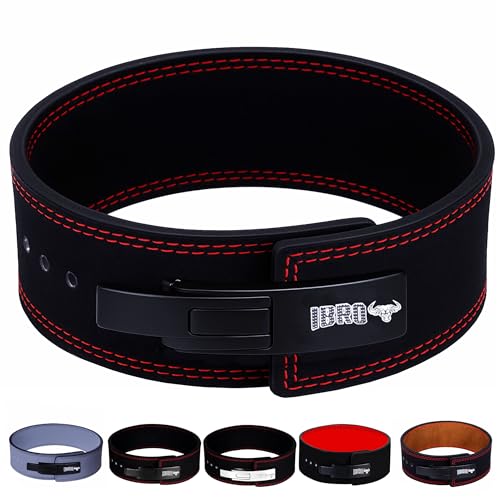
- Quick-release steel lever buckle
- Double-stitched leather with suede finish
- Detailed sizing and one-year warranty
Best For: Lifters wanting repeatable fit and clear setup guidance
Best Pre-Broken Leather

- Pre-broken leather construction
- 4-inch back support and quick adjustment
- One-year replacement warranty
Best For: Heavy powerlifting and weightlifting training
Steady-Brace Pick – 10mm Leather Lever Belt
This 10mm leather lever belt is a straightforward option for lifters comparing lever weightlifting belts for heavy squats, deadlifts, and other powerlifting work. Its four-inch width is designed to brace the torso evenly, while the quick-locking buckle makes tightening faster than using a traditional prong belt.
Best For: Men and women who want firm core and lower-back support with a fast-adjusting lever closure.
Pros:
- 10mm premium leather construction with a suede lining is designed to resist stretching.
- Four-inch width supports the core and lower back during heavy lifts.
- Heavy-duty lever buckle provides quick, precise fastening.
- Suitable for powerlifting and serious strength training.
Cons:
- The listed medium size has a 35-inch waist specification, so careful measuring is important.
- At 3.9 pounds, it may feel substantial compared with lighter training belts.
This belt emphasizes sturdy leather support and quick setup. Measure your actual waist with a flexible tape rather than relying on pants size before ordering.
Competition-Ready Pick – Gymreapers 10mm Lever Belt
For lifters comparing lever weightlifting belts for both training and competition, this Gymreapers model combines a 10mm bovine-leather construction with a four-inch contoured profile. Its adjustable steel lever buckle is intended to provide a secure fit for squats, deadlifts, bench press, and broader strength-training sessions.
Best For: Powerlifters who want one leather belt for regular training and IPF-, IPL-, USPA-, or USAPL-related competition requirements.
Pros:
- Made from 100% premium bovine leather with a real suede exterior.
- Contoured four-inch design aims to support the core without sacrificing mobility.
- Camac steel lever buckle allows quick, precise adjustments.
- Listed as IPF and USAPL competition approved.
Cons:
- The 10mm leather construction may feel more rigid than a flexible belt.
- The listed medium fits a 30–36-inch waist, so size selection requires accurate measuring.
Double-lined stitching, finished edges, and the structured leather core make this a feature-rich option for serious lifting. Its competition-oriented specifications may be especially useful if you prefer not to change belts between the gym and the platform.
Classic Black Pick – 10mm Powerlifting Lever Belt
This black 10mm leather belt is a practical choice for shoppers seeking lever weightlifting belts with a traditional powerlifting profile. The four-inch design distributes bracing around the torso, while the heavy-duty lever buckle is built for quick tightening before demanding sets.
Best For: Lifters who want a black leather belt for heavy squats, deadlifts, and powerlifting-style training.
Pros:
- 10mm leather with a suede lining is designed to resist stretching.
- Four-inch width helps brace the abs and lower back evenly.
- Lever closure snaps shut quickly for a secure fit.
- Designed for both men and women engaged in powerlifting.
Cons:
- The medium listing specifies a 35-inch waist, limiting suitability without checking the sizing chart.
- Leather construction may require more break-in than a softer belt.
With its simple black finish and sturdy leather build, this model focuses on dependable bracing rather than extra features. Confirm your true waist measurement with a flexible tape before purchase.
Large-Size Strength Pick – Gymreapers Large 10mm Lever Belt
This large Gymreapers belt is a strong option for shoppers comparing lever weightlifting belts in a broader waist range. It uses a 10mm leather core, a four-inch design, and a heavy-duty lever buckle to help lifters brace during squats, deadlifts, bench press, and other strength work.
Best For: Lifters with a 34–41-inch waist who want a competition-oriented leather lever belt for training and powerlifting.
Pros:
- Large size is listed for 34–41-inch waists.
- 10mm genuine bovine leather with a suede exterior provides structured support.
- Camac steel lever buckle enables quick, secure adjustment.
- Listed as IPF, IPL, USPA, and USAPL competition approved.
Cons:
- The rigid 10mm leather construction may feel less flexible during lighter workouts.
- The four-inch width and substantial build may not suit lifters seeking a minimalist belt.
This version stands out primarily for its large size range and competition-focused specifications. Its durable construction is suited to lifters who want consistent support across training and meet preparation.
Best Overall Leather Pick – 10mm Gray Lever Belt
This 10mm leather option is a practical choice if you are comparing lever weightlifting belts for consistent support during heavy squats and deadlifts. Its suede lining, four-inch width, and quick-locking lever buckle are designed for a secure, repeatable fit.
Best For: Lifters who want a durable, straightforward leather belt for powerlifting-focused training.
Pros:
- 10mm leather construction with suede lining resists stretching.
- Heavy-duty lever buckle locks quickly and allows a precise fit.
- Four-inch width supports the core and lower back evenly.
Cons:
- Requires careful waist measurement rather than relying on pants size.
- The listed model is gray, which may not suit every gym style.
This belt emphasizes dependable construction and simple lever adjustment. Verify your true waist measurement against the listing chart before ordering, since the supplied details identify the shown size as large with a 40-inch waist.
Best Adjustable Support – DEFY 10mm Lever Belt
For shoppers comparing lever weightlifting belts, the DEFY combines oil-tanned cowhide leather with a 10mm profile and four-inch back support. Its ten spaced holes and lever buckle provide room to fine-tune the fit for demanding gym sessions.
Best For: Beginners and experienced lifters seeking a durable belt for general strength training or powerlifting.
Pros:
- Oil-tanned cowhide leather is designed for durability and absorbency.
- Ten precision-spaced holes support adjustable sizing.
- Chrome buckle and dual stitching add to the belt’s durable construction.
- Four-inch, 10mm design helps stabilize the core, abs, and back.
Cons:
- At 1.19 kg, it may feel substantial compared with lighter belts.
- The supplied listing identifies the shown version as medium in black and red, so sizing and color options should be checked.
DEFY is a strong all-purpose option when you want traditional leather construction and multiple adjustment points. Its notes also identify compatibility with several powerlifting federations, including USPA, IPL, WPC, and GPC.
Best Thickness Options – IBRO Leather Lever Belt
The IBRO stands out among lever weightlifting belts because it offers 8mm, 10mm, and 13mm thickness choices. The steel quick-release lever, uniform four-inch width, and suede-finished leather construction let you match stiffness and support to your training experience.
Best For: Lifters who want to choose between a more flexible belt and heavier options for powerlifting or strongman training.
Pros:
- Available in 8mm, 10mm, and 13mm thicknesses for different lifting preferences.
- Steel lever buckle provides repeatable tightening and one-motion release.
- Genuine leather core, suede finish, and double stitching help it hold its shape.
- Includes a one-year warranty covering lever or stitching failure.
Cons:
- Arrives unassembled and requires a Phillips screwdriver, which is not included.
- Users should tighten the lever screws and check them before each session.
- The supplied product details describe a medium 10mm all-black version, so confirm the desired size and thickness.
IBRO offers the broadest fit and thickness flexibility in this group. Its sizing guidance recommends measuring at the belly button over a shirt, making that step especially important before selecting a size.
Best Adjustable Fit – MANUEKLEAR 10mm Lever Belt
The MANUEKLEAR is a practical option if you want a 10mm leather lever weightlifting belt with a broad adjustment range. Its 4-inch width, non-slip leather construction, and quick-locking buckle are aimed at steady support for squats, deadlifts, and general strength training.
Best For: Lifters who want a highly adjustable belt for varied waist sizes and multiple strength-training movements.
Pros:
- 10mm-thick, 4-inch-wide leather construction.
- Lever buckle adjusts across a stated 24- to 45-inch range.
- Designed for squats, deadlifts, powerlifting, and general weightlifting.
- Includes lumbar-support-focused design and after-sales support.
Cons:
- The supplied sizing details list a medium size at 29–35 inches, so check fit carefully.
- At about 1,148g, it may feel substantial compared with lighter belts.
This belt emphasizes broad adjustability and durable leather support. It is worth considering when you want one lever belt for several training styles, provided the listed size range matches your waist.
Best Setup Guidance – IBRO 10mm Leather Lever Belt
The IBRO 10mm is a straightforward choice among lever weightlifting belts for lifters who value repeatable tightening between sets. Its steel quick-release buckle, suede-finished leather, double stitching, and clearly listed sizes make it suitable for structured powerlifting and gym training.
Best For: Beginners through experienced lifters who want a 10mm all-purpose belt with detailed sizing and a one-year warranty.
Pros:
- Steel lever buckle opens quickly and is intended to provide the same fit each set.
- Genuine leather core with suede finish and double stitching.
- Uniform 4-inch width and 10mm thickness offer an all-round support profile.
- Includes sizing guidance, setup instructions, and a one-year replacement warranty.
Cons:
- Arrives unassembled, and a Phillips screwdriver is not included.
- The supplied listing identifies the 10mm model as large with a 38-inch waist size, so verify the selected size.
- The 10mm option is less flexible than the listed 8mm version.
IBRO stands out for its practical fit guidance and setup support. Choose the 10mm version for a balanced option, or consider the brand’s other thicknesses if you specifically need more flexibility or maximum stiffness.
Best Pre-Broken Leather – POZTEV 10mm Powerlifting Belt
The POZTEV 10mm lever-style belt is designed for heavy powerlifting and weightlifting movements. Its pre-broken leather, 4-inch vertical back support, and quick-release mechanism target lifters who want a supportive belt that is easier to adjust during squats and deadlifts.
Best For: Powerlifters and weightlifters seeking a durable leather belt with a quick-adjusting buckle.
Pros:
- 10mm leather construction with a 4-inch back-support profile.
- Pre-broken leather is intended to improve comfort and durability.
- Lever mechanism allows quick loosening and tightening.
- Includes stated one-year free replacement warranty and lifetime customer support.
Cons:
- The supplied details conflict slightly, listing 10mm in the title and 9mm in the size information.
- The product details identify the closure as a buckle rather than explicitly naming it a lever closure.
- The medium listing specifies a 32–38-inch range, so sizing should be checked before ordering.
POZTEV’s main appeal is its pre-broken leather and heavy-training focus. Confirm the exact thickness and buckle configuration on the selected listing, then match the medium size to your measured waist.
How We Picked These Lever Weightlifting Belts
We focused on the features that matter most when comparing Lever Weightlifting Belts: material, thickness, width, closure design, adjustability, sizing, and stated competition suitability. Leather models typically provide a firm, stable feel, while thicker belts can offer more resistance against bracing forces but may require a longer break-in period.
We also considered whether each belt appears suited to general gym training, powerlifting, strongman work, or a mix of activities. Because sizing and body shape vary, always check the manufacturer’s measurement instructions rather than choosing solely by your pant size.
Quick Comparison
| Feature | What to look for | Why it matters |
|---|---|---|
| Thickness | 10mm or 13mm options | Thicker belts generally feel more rigid and supportive. |
| Width | Usually around 4 inches | A wider profile can provide consistent abdominal and lower-back coverage. |
| Material | Leather or reinforced synthetic construction | Leather is often chosen for structure and long-term durability. |
| Closure | Lever with replaceable hardware | Enables quick, repeatable tightening between sets. |
| Fit | Adjustment holes spanning your waist measurement | Allows a secure fit during training and changing body weight. |
Key Buying Factors for Lever Weightlifting Belts
Thickness and Stiffness
A 10mm belt is a practical choice for many lifters because it balances support, comfort, and break-in time. A 13mm belt may suit experienced lifters who want maximum rigidity, but it can feel bulky and less forgiving during setup or movements requiring more mobility.
Width and Shape
A 4-inch uniform-width belt is common for powerlifting and general heavy lifting. Check the profile around your ribs and hips: a belt that is technically supportive but digs into your body can interfere with positioning and breathing.
Lever Adjustability
Look for a lever system with secure hardware and enough adjustment range. Replaceable lever components are useful if you train frequently. Set the belt so it is snug enough to brace against without restricting normal breathing or causing sharp pressure.
Competition Considerations
If you plan to compete, verify the current rules of your federation. “IPF approved” or similar claims should be checked against the organization and division in which you intend to lift, since permitted dimensions and materials can vary.
Who Should Buy Which Lever Weightlifting Belts?
- Newer lifters: Choose a moderately rigid 10mm belt with clear sizing and a comfortable break-in profile.
- Powerlifters: Prioritize a uniform-width leather belt, dependable lever hardware, and competition-rule compatibility.
- Strongman and general strength trainees: Look for durable construction and a fit that permits the movement variety in your program.
- Experienced heavy lifters: Consider a stiffer 10mm or 13mm option if you already know you prefer substantial abdominal support.
- Shared or changing-size users: Favor a broad adjustment range and easy-to-change lever settings.
The best belt is the one that fits securely, supports your bracing technique, and stays comfortable throughout your training. Use it as a complement to sound lifting mechanics—not as a substitute for gradual progression, proper warm-ups, or coaching.