The right helmet can make a noticeable difference during a triathlon, where aerodynamic efficiency, ventilation, comfort, and secure fit all matter over sustained effort. This roundup compares 10 options ranging from race-focused aero helmets to adaptable road helmets with integrated eye protection.
Use the guide below to narrow your choice by course demands, safety features, climate, and budget before buying.
Best 10 Cycling Helmets for Triathlons Picks for 2026
Premium Aero Pick

- MIPS Technology
- Polycarbonate shell
- Super Fit Engineering
Best For: Adult riders seeking a sporty, MIPS-equipped cycling helmet
Easy-Adjust Entry Pick

- Built-in KinetiCore
- TurnSys dial adjustment
- Universal Lazer LED compatible
Best For: Adults wanting a simple, adjustable one-size helmet
Large-Size Aero Pick

- Large size listed
- Polycarbonate shell
- Adjustable strap
Best For: Adult cyclists needing a large Giro Aerohead configuration
Visibility and Value Pick

- Three-mode rear light
- Detachable UV400 magnetic goggles
- 270 g adjustable design
Best For: Adults wanting visibility features and integrated eye protection
Balanced Ventilation Pick
- Integrated MIPS protection
- One-handed Roc Loc 5 fit adjustment
- Wind Tunnel ventilation
Best For: Triathletes wanting adjustable comfort and airflow
Eyewear-Friendly Choice

- MIPS and zonal Koroyd coverage
- 21 vents with AirEvac eyewear integration
- 270-degree VaporFit adjustment
Best For: Triathletes who ride with eyewear
Light-Colored Race-Day Option
- Matte-white finish
- Integrated MIPS protection
- Wind Tunnel ventilation and Roc Loc 5 fit
Best For: Medium-size riders preferring a light-colored helmet
Best Visor Value
ROCKBROS Magnetic Goggles Helmet
- Lightweight 209 g helmet body
- Detachable magnetic goggles and visor
- Adjustable 58–62 cm adult fit
Best For: Triathletes who want integrated eye protection and a lightweight fit
Best MIPS Pick

- MIPS Evolve Core rotational-impact system
- One-handed Roc Loc Sport adjustment
- Deep channels and large vents
Best For: Riders prioritizing MIPS technology and airflow
Best Glasses-Friendly Fit

- Detachable magnetic UV visor
- Designed for prescription glasses
- Adjustable 54–60 cm fit
Best For: Riders wanting a visor-equipped, glasses-friendly helmet
Premium Aero Pick – Giro Aerohead MIPS
Giro Aerohead MIPS Bike Helmet - Black/Titanium Medium | Why We Like The Giro Aerohead MIPS Helmet
Check Price On AmazonFor triathletes prioritizing aerodynamic styling and rotational-impact technology, the Giro Aerohead MIPS is a focused option among cycling helmets for triathlons. Its polycarbonate shell, expanded-polystyrene interior, and Super Fit Engineering support a performance-oriented fit.
Best For: Adult riders seeking a sporty, MIPS-equipped helmet for cycling.
Pros:
- MIPS Technology is included.
- Polycarbonate shell with expanded-polystyrene inner material.
- Super Fit Engineering is designed for a performance-oriented fit.
Cons:
- Only a medium size is listed.
- The black/titanium color and sporty design may not suit every preference.
The Aerohead MIPS is a streamlined choice for riders who value Giro’s fit-focused design and added MIPS technology. Check the listed sizing carefully before ordering.
Easy-Adjust Entry Pick – LAZER Tempo KinetiCore
The LAZER Tempo KinetiCore is a practical entry-level option for shoppers comparing cycling helmets for triathlons. It combines built-in KinetiCore rotational-impact protection, a lightweight design, and a TurnSys dial for quick adjustment.
Best For: Adults wanting an adjustable, one-size cycling helmet with optional LED-light compatibility.
Pros:
- Built-in KinetiCore is designed to provide additional protection from rotational impact.
- TurnSys system allows quick fit adjustment.
- Compatible with the Universal Lazer LED light.
- Listed as lightweight and adjustable.
Cons:
- Only a white, one-size configuration is listed.
- An LED light is not listed as included.
- Its entry-level positioning may not meet every performance rider’s preferences.
With simple dial adjustment and visibility-accessory compatibility, the Tempo KinetiCore suits riders who want straightforward everyday functionality. Confirm that the one-size fit works for your head measurements.
Large-Size Aero Pick – Giro Aerohead MIPS Large
The large-size Giro Aerohead MIPS gives triathletes another sizing option when evaluating cycling helmets for triathlons. It uses a polycarbonate shell and expanded-polystyrene interior, with an adjustable strap and Giro’s Super Fit Engineering.
Best For: Adult cyclists who need a large Giro Aerohead MIPS configuration.
Pros:
- Polycarbonate shell and expanded-polystyrene inner material.
- Super Fit Engineering supports a fit-focused design.
- Adjustable strap is included.
Cons:
- The supplied notes do not list MIPS Technology under additional features for this ASIN.
- Only the large size and black/titanium color are listed.
- Included components are listed as nothing.
This version is worth considering primarily when the large size matches your needs. Compare the exact listing details with other Aerohead configurations before purchasing, especially if MIPS is a deciding feature.
Visibility and Value Pick – Basecamp BC-069 Helmet
The Basecamp BC-069 adds visibility and eye coverage to the shortlist of cycling helmets for triathlons. It includes a three-mode rear light, detachable magnetic goggles with UV400 protection, adjustable fitting, and a 270 g lightweight design.
Best For: Adult road or mountain cyclists seeking built-in visibility features and a versatile visor.
Pros:
- Includes a rear light with steady, slow-flashing, and fast-flashing modes.
- Detachable magnetic goggles provide UV400 protection and can be worn up, down, or removed.
- Three-way adjustment system fits listed head sizes from 57–62 cm.
- Includes a spare battery, portable backpack, and soft interior pads.
Cons:
- At 270 g, it may be heavier than some dedicated race-oriented helmets.
- The large size is the only listed configuration.
- The supplied notes do not mention MIPS or KinetiCore technology.
The BC-069 is a feature-rich choice for riders who value visibility and integrated eye protection over a minimalist setup. Its listed fit range and included accessories make it especially practical for mixed road and recreational use.
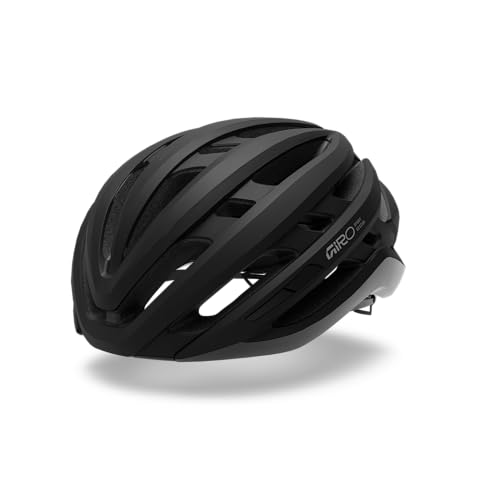
Balanced Ventilation Pick – Giro Agilis MIPS
For cyclists comparing cycling helmets for triathlons, the Giro Agilis MIPS combines a sleek profile with MIPS protection, adjustable fit, and ventilation. Its Wind Tunnel design is intended to move air through the helmet, which can be useful during demanding rides.
Best For: Triathletes and road cyclists who want adjustable comfort, MIPS technology, and airflow in a sporty helmet.
Pros:
- Integrated MIPS system is designed to help reduce rotational forces.
- Roc Loc 5 allows one-handed tension and fore-aft adjustments.
- Wind Tunnel ventilation uses vents and internal channels to move heat out.
- Hard-shell and in-mold Hardbody lower wrap add durability without excess weight.
Cons:
- The supplied listing specifies a medium size, so fit availability may be limited.
- Its 1.5-pound listed weight may not appeal to riders seeking the lightest option.
The Agilis MIPS is a practical all-around choice when fit tuning and ventilation matter as much as impact-protection features. Check sizing carefully before choosing it for race-day use.
Eyewear-Friendly Choice – SMITH Signal Cycling Helmet
When choosing cycling helmets for triathlons, the SMITH Signal emphasizes ventilated protection and eyewear compatibility. Its 21 fixed vents, AirEvac system, MIPS protection, and 270-degree VaporFit adjustment support comfort across training rides and everyday cycling.
Best For: Triathletes and road riders who prioritize eyewear integration, adjustable fit, and consistent airflow.
Pros:
- Zonal Koroyd coverage is described as lightweight, energy-absorbing, and ventilated.
- MIPS safety protection system is included.
- Twenty-one fixed vents and AirEvac are designed to promote airflow and help keep glasses clear.
- VaporFit provides 270-degree fit adjustment using a dial.
Cons:
- The supplied listing specifies a large size, which may not suit every rider.
- Fixed vents offer less ventilation adjustment than variable vent systems.
The Signal is a strong fit for riders who use glasses and want a helmet that addresses airflow and fog control alongside protection. Confirm the large sizing works for you before ordering.
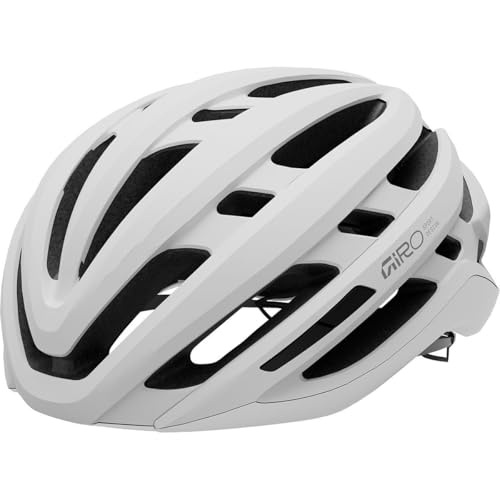
Light-Colored Race-Day Option – Giro Agilis MIPS Matte White
For athletes researching cycling helmets for triathlons, this matte-white Giro Agilis MIPS version offers the same practical combination of MIPS protection, customizable fit, and Wind Tunnel ventilation in a light-colored finish. It is designed for riders who want an airy, sporty road helmet.
Best For: Triathletes who prefer a matte-white helmet with adjustable fit, ventilation, and integrated MIPS technology.
Pros:
- Integrated MIPS is designed to reduce rotational forces.
- Roc Loc 5 supports quick tension and fore-aft fit adjustments.
- Wind Tunnel vents and internal channels help move cool air through the helmet.
- Polycarbonate lower wrap adds a durability-focused shell element.
Cons:
- The supplied listing specifies a medium size, so it may not fit every athlete.
- The 0.67-kilogram listed weight is heavier than some minimalist helmet options.
This version suits riders who want Agilis features with a matte-white appearance. As with any triathlon helmet, prioritize a secure, comfortable fit over color or styling.
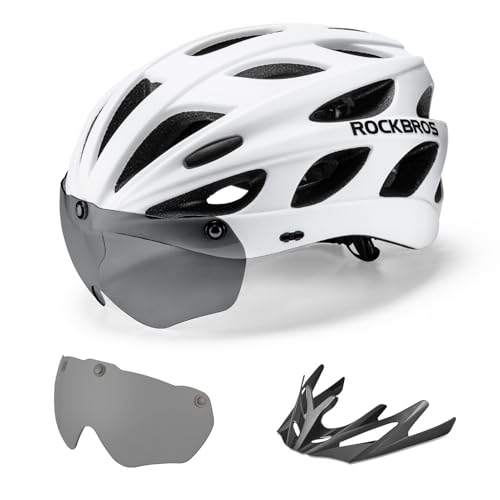
Best Visor Value – ROCKBROS Magnetic Goggles Helmet
For cyclists comparing cycling helmets for triathlons, the ROCKBROS offers a lightweight open-face design with useful eye coverage. Its adjustable fit, magnetic goggles, and sun visor make it a practical option for riders who want flexibility across changing conditions.
Best For: Triathletes and recreational cyclists who wear glasses and want detachable eye protection.
Pros:
- Lightweight 209 g helmet body with 24 ventilation vents.
- Detachable magnetic goggles and visor help shield against sun, wind, and sand.
- One-hand adjustment supports a 58–62 cm adult fit.
- Uses a PC shell and high-density EPS foam and lists CPSC, CE, GB, and GCC certifications.
Cons:
- The listed size range is narrower than the one-size-fits-most alternatives.
- The 209 g weight excludes the goggles and visor.
- Its open-face design may provide less coverage than more enclosed helmet styles.
The ROCKBROS stands out when integrated eye protection and low helmet weight matter. Confirm the 58–62 cm fit before buying, especially if you plan to use the visor and goggles together.
Best MIPS Pick – Giro Isode MIPS II
The Giro Isode MIPS II is a straightforward choice for shoppers evaluating cycling helmets for triathlons and prioritizing rotational-impact technology. It combines MIPS Evolve Core, an adjustable fit system, and deep ventilation channels in a sport-focused design.
Best For: Riders who prioritize MIPS technology, adjustable fit, and strong airflow over built-in visor features.
Pros:
- MIPS Evolve Core is designed to reduce rotational forces in certain impacts.
- Roc Loc Sport fit system offers one-handed adjustment with a 7 cm range.
- In-mold construction combines a polycarbonate shell with an impact-absorbing foam liner.
- Deep internal channels and large vents support airflow and cooling.
Cons:
- No visor or goggles are listed among the included features.
- The listed item weight is 1.4 pounds, heavier than some lightweight options.
- Universal Adult sizing still requires checking compatibility with your head shape.
The Isode MIPS II is a solid fit-and-ventilation-focused option for training and racing setups that already use separate eyewear. Its main advantage is the combination of MIPS technology and easy one-handed adjustment.
Best Glasses-Friendly Fit – Odoland Magnetic Visor Helmet
The Odoland is a practical contender among cycling helmets for triathlons, especially for riders who want a magnetic sun visor without giving up prescription-glasses compatibility. Its rear dial, soft cushion, and ventilation holes are designed for an adjustable everyday cycling fit.
Best For: Triathletes and casual riders seeking a glasses-friendly helmet with detachable UV and wind coverage.
Pros:
- Detachable magnetic visor helps protect against dust, wind, and UV rays.
- Glasses-friendly design accommodates prescription eyewear.
- Rear dial adjusts the 54–60 cm fit range with one hand.
- PC shell and EPS foam are paired with ASTM, CPSC, and CE certifications.
Cons:
- The 54–60 cm range may not fit larger adult head sizes.
- The listed weight is 0.55 kg, so it is not the lightest option here.
- Its included visor may be unnecessary for riders who already use cycling sunglasses.
The Odoland makes the most sense when eye coverage and prescription-glasses compatibility are central to your selection. Measure your head carefully, since its listed fit range is more limited than a universal adult design.
How We Picked These Cycling Helmets for Triathlons
We focused on the features that matter most during training and racing: secure adjustment, practical ventilation, aerodynamic design, weight, eye protection, and everyday versatility. We also considered whether a helmet is better suited to time-trial efforts, open-road riding, commuting, or mixed use. MIPS or comparable rotational-impact protection can be a useful consideration, but fit and correct positioning remain essential.
Because product specifications and fit can vary by size, confirm the manufacturer’s sizing chart, certification details, return policy, and included accessories before ordering.
Quick Comparison
| Best For | Look For | Most Suitable Type |
|---|---|---|
| Fast, aerodynamic racing | Streamlined shell and stable fit | Aero road or time-trial helmet |
| Hot-weather racing | Generous vents and moisture management | Well-ventilated road helmet |
| Training and racing | Comfort, adjustability, and durability | Versatile road helmet |
| Built-in eye coverage | Magnetic visor or detachable goggles | Helmet with integrated visor |
| Added impact protection | MIPS or similar rotational-impact system | Certified helmet with rotational protection |
Key Buying Factors for Cycling Helmets for Triathlons
Fit and Stability
A helmet should sit level, cover the forehead without obstructing vision, and remain stable when you move your head. Look for a dial or other precise retention system, then verify that the straps lie flat and form a comfortable V around the ears. A poor fit can reduce both comfort and protection.
Aerodynamics Versus Ventilation
Aero designs may help reduce drag on flat, fast courses, but they can feel warmer during climbs or hot races. If you compete in humid conditions or prioritize training versatility, choose a helmet with more airflow. For short, high-speed events, a smoother profile may be the better trade-off.
Safety and Construction
Choose a helmet that meets the safety standards required in your market and check its certification label. MIPS can add rotational-impact protection, while a sturdy in-mold construction may improve durability without excessive weight. Replace any helmet after a significant impact, even if visible damage is limited.
Visors, Goggles, and Everyday Use
Integrated or detachable eye protection can simplify race-day equipment and reduce glare, insects, and wind exposure. Make sure the visor does not interfere with sunglasses, transitions, or your preferred riding position. Removable accessories are particularly useful if you want one helmet for both racing and regular rides.
Who Should Buy Which Cycling Helmets for Triathlons?
Choose an aero-focused helmet if you regularly race fast, flat courses and are willing to prioritize aerodynamic performance over maximum airflow. Choose a ventilated road helmet if you train frequently, race in warm weather, or want a more flexible all-season option. Choose a model with MIPS if rotational-impact protection is an important part of your selection criteria.
Choose a visor-equipped helmet if you want integrated eye coverage and fewer accessories to manage on race day. For beginners, commuters, and athletes building a single-bike setup, the best option is usually a comfortable, adjustable helmet that fits securely and works for both training and competition.