The right pedals can make cycling feel more controlled and comfortable when knee pain is part of the equation. A stable platform, suitable foot position, and smooth engagement may help reduce awkward movement on rides.
We compare 10 bike pedals for knee pain across clipless, flat, comfort, and pedal-extender designs so you can choose based on riding style, fit, and support needs.
Best 10 Bike Pedals for Knee Pain Picks for 2026
Easy-Entry Pick

- Adjustable clipless tension
- Pop-up engagement mechanism
- Non-slip flat side with reflector
Best For: Cross-country riders seeking a versatile clipless/flat pedal
Simple Commuter Option

- Nylon platform construction
- 320 g listed weight
- Made for hybrid or commuter bikes
Best For: Everyday hybrid and commuter riding
Dual-Sided Versatility

- SPD and flat sides
- Aluminum construction
- Adjustable pedal design
Best For: Mountain and gravel riders wanting flexible footwear options
Large Platform Support

- 114 x 114 mm large platform
- Replaceable traction pins
- Serviceable IGUS bearings and seals
Best For: Mountain riders with US 10-15 shoes
Best All-Around Grip

- Concave platform for comfort
- Adjustable, replaceable grip pins
- Sealed bearings and mud clearance
Best For: Commuting, MTB, and e-MTB riders wanting secure foot placement
Best Gentle Cruiser Surface

- Textured non-slip rubber surface
- Less aggressive pedal feel
- Standard 9/16-inch spindle
Best For: Casual cruiser-bike riding and comfort-focused pedal contact
Best Stance-Width Adjustment

- Widen stance by 20mm
- Chrome-molybdenum steel construction
- Fits standard 9/16-inch threading
Best For: Riders seeking wider hip, knee, and foot alignment
Ergonomic Comfort Pick

- Ergonomic inner stop supports foot alignment
- Large footprint helps distribute pressure
- Reflectors and non-slip surface improve confidence
Best For: Commuting, touring, and everyday comfort
Wide Platform Grip Pick
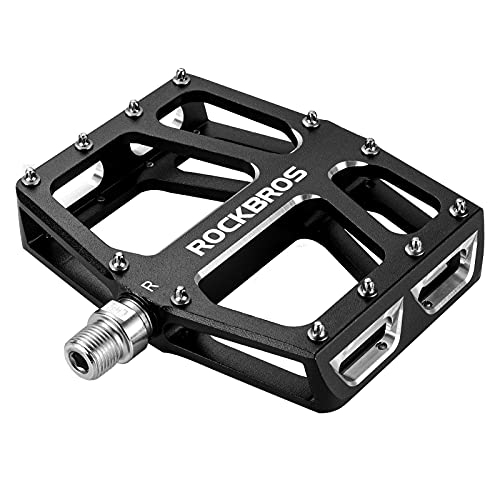
- 120 mm platform supports a stable stance
- Steel pins provide strong foot grip
- Aluminum body and Cr-Mo spindle are durable
Best For: Stable, grippy riding across multiple bike types
Lightweight Trail Platform

- Wide 106 x 104 mm platform supports the foot
- Thin profile helps reduce pedal strikes
- Sealed bearings and replaceable pins add practicality
Best For: Trail, gravel, and mixed-surface riding
Easy-Entry Pick – Shimano PD-T421 CLICK'R
For riders comparing bike pedals for knee pain, the Shimano PD-T421 CLICK’R offers adjustable tension and a pop-up mechanism designed for easier clipless engagement. Its flat-pedal side also provides a non-slip, concave surface for riders who want a more flexible setup.
Best For: Adult cross-country riders who want adjustable clipless tension with a usable flat side.
Pros:
- Adjustable tension allows rider-specific customization.
- Pop-up mechanism may make clipless entry more approachable.
- Sealed bearings and a chrome-moly axle support low-maintenance use.
- Integrated reflectors improve visibility in low-light riding.
Cons:
- Clipless pedals require compatible cycling shoes and cleats.
- The supplied notes do not specify the available tension range.
Its combination of customizable release tension and a flat side makes this a versatile option, though riders should confirm that its clipless format suits their comfort and footwear preferences.
Simple Commuter Option – Race Face Ride Pedals
When shopping for bike pedals for knee pain, the Race Face Ride Pedals provide a straightforward platform-pedal choice for hybrid and commuter bikes. Their nylon construction keeps the design practical for everyday riding.
Best For: Adult hybrid or commuter riders who prefer a simple platform pedal.
Pros:
- Designed for hybrid or commuter bike use.
- Nylon material offers a lightweight 320 g construction.
- Standard 9/16-inch thread fits many adult bicycles.
Cons:
- The supplied notes do not specify adjustable features or bearing details.
- There is no stated platform size or traction-pin specification.
This is a basic, practical option for riders who want a conventional pedal without a clipless mechanism. Because the notes provide limited ergonomic detail, check the platform dimensions and grip needs before buying.
Dual-Sided Versatility – Shimano SPD PD-EH500
The Shimano SPD PD-EH500 is worth considering among bike pedals for knee pain if you want to alternate between clipped-in and flat-pedal riding. Its aluminum dual SPD/flat design supports mountain-bike and gravel use while keeping the setup adaptable.
Best For: Adult mountain-bike and gravel riders who want both SPD clipless and flat-pedal functionality.
Pros:
- Dual SPD/flat design accommodates different riding preferences.
- Aluminum construction provides a durable pedal body.
- Adjustable pedal style offers setup flexibility.
- Uses a standard 9/16-inch thread size.
Cons:
- Clipless use requires compatible SPD shoes and cleats.
- The supplied notes do not state the adjustment range or flat-side grip details.
The reversible format makes it easier to choose between SPD engagement and a flat platform from ride to ride. Riders focused on knee comfort should use the adjustable setup cautiously and prioritize a comfortable cleat position.
Large Platform Support – Crankbrothers Stamp Flat MTB
For riders seeking bike pedals for knee pain, the Crankbrothers Stamp Flat MTB Pedals offer a large 114 x 114 mm platform intended for US 10-15 shoes. The reinforced composite body, replaceable traction pins, and serviceable bearings create a durable flat-pedal setup.
Best For: Mountain-bike riders with large shoes who want a lightweight, high-grip flat pedal.
Pros:
- Large size-specific 114 x 114 mm platform supports larger footwear.
- Replaceable traction pins provide grip and simplify maintenance.
- Serviceable IGUS bearings and seals support long-term upkeep.
- Includes a five-year warranty and weighs 384 g.
Cons:
- The large platform is specified for US 10-15 or EU 43.5-49 shoes.
- Traction pins may feel aggressive to riders new to flat pedals.
- The supplied notes do not include a concave profile or float feature.
This pedal’s broad platform can help larger-footed riders maintain consistent shoe support, but fit is important. Confirm your shoe size and consider whether the substantial pin grip matches your preferred riding feel.
Best All-Around Grip – Shimano PD-GR500 Flat Pedals
For riders comparing bike pedals for knee pain, the Shimano PD-GR500 is a strong flat-pedal option when secure foot placement and a comfortable platform are priorities. Its concave shape and adjustable pins suit commuting, mountain biking, and longer rides.
Best For: Riders who want a durable, high-grip flat pedal for commuting, MTB, or e-MTB use.
Pros:
- Concave platform is designed to improve efficiency and comfort on longer rides.
- Nine adjustable, replaceable pins help keep shoes securely positioned.
- Sealed bearing cartridge axle and chromoly spindle support low-maintenance use.
- Open platform provides useful mud clearance.
Cons:
- Its aggressive pins may feel excessive for riders seeking a gentler cruiser-style surface.
- At 0.8 kg, it is not a particularly lightweight pedal option.
The GR500 is a versatile choice for riders who value grip and foot stability. Its flat design and adjustable pins make it practical for varied terrain, though riders wanting a softer, less aggressive interface may prefer a comfort pedal.
Best Gentle Cruiser Surface – Sunlite Comfort Grips Pedals
For shoppers seeking bike pedals for knee pain, the Sunlite Comfort Grips pedal offers a less aggressive riding surface than many performance-oriented flat pedals. Its textured rubber area is intended for comfortable contact on cruiser bikes and relaxed everyday rides.
Best For: Cruiser-bike riders who prefer a non-slip rubber surface and a less aggressive pedal feel.
Pros:
- Textured rubber surface helps provide non-slip shoe contact.
- One-piece ABS resin composite body keeps the design straightforward and durable.
- Standard 9/16-inch boron spindle fits most three-piece cranks.
- Designed specifically for cruiser bikes and relaxed riding.
Cons:
- It is intended for cruiser bikes rather than aggressive MTB riding.
- The notes do not specify adjustable pins or a concave platform for fine-tuning foot position.
This pedal is a practical comfort-focused choice for casual riders who want a grippy but gentle surface. It may be less suitable for riders who need the high traction and adjustability of a technical mountain-bike pedal.
Best Stance-Width Adjustment – 20mm Pedal Extenders
Among bike pedals for knee pain, these extenders take a different approach: they add 20mm to the pedal axle to widen stance width. That adjustment is intended to help align the hips, knees, and feet while reducing shoe-to-crank or shoe-to-tire friction.
Best For: Riders with wider hips or larger feet who want to experiment with a wider pedal stance on compatible bikes.
Pros:
- Add 20mm of axle length to widen stance width.
- Designed to support a more natural hip, knee, and foot alignment.
- Chrome-molybdenum steel construction is corrosion-resistant and durable.
- Clear left and right markings simplify installation.
Cons:
- These are adapters, not complete replacement pedals.
- Compatible with 9/16-inch threading only; they do not fit 1/2-inch cranks.
- Not recommended for use with carbon cranks.
These extenders are worth considering when stance width or crank-arm clearance is the main concern. Confirm the bike’s threading and crank material before installation, and tighten the left and right sides in their specified directions.
Ergonomic Comfort Pick – PT-L-Pedals
PT-L-Pedals | Ergon PT Platform Pedals - Composite, Ergonomic, Long-Distance Comfort
Check Price On AmazonFor riders seeking bike pedals for knee pain, the PT-L-Pedals focus on foot alignment and a more comfortable pedaling position. Their ergonomic design, inner stop, and broad footprint are suited to commuting, city rides, touring, and everyday cycling.
Best For: Commuters and recreational riders prioritizing ergonomic foot positioning and long-distance comfort.
Pros:
- Ergonomic shape with an inner stop to help improve foot alignment.
- Large footprint supports pressure distribution in everyday shoes.
- Non-slip grip tape, rounded edges, and reflectors add stability and visibility.
- Lightweight, robust fibreglass-reinforced plastic construction.
Cons:
- Plastic composite construction may not suit riders seeking aluminum pedals.
- Designed around comfort and everyday riding rather than aggressive trail grip.
The PT-L-Pedals are a comfort-oriented option for riders who want a more supported, confidence-inspiring platform for regular road and city use. Their ergonomic features make them particularly relevant when foot placement is a priority.
Wide Platform Grip Pick – ROCKBROS MTB Pedals
These ROCKBROS pedals are a practical choice among bike pedals for knee pain when a broad, stable platform matters. The 120 mm aluminum platform, contoured shape, and traction pins help keep the foot planted across road, commuter, BMX, and mountain-bike use.
Best For: Riders wanting a wide, highly grippy platform with a durable aluminum body.
Pros:
- 120 mm-wide platform provides a stable contact area.
- Twelve rear-loading steel pins per side deliver strong grip.
- Sealed DU bearings are designed for smooth, quiet rotation.
- CNC-machined aluminum body and Cr-Mo spindle support durability.
Cons:
- At 1.2 pounds per pair, they are heavier than the supplied composite options.
- Exposed traction pins may be more aggressive than some casual riders prefer.
The ROCKBROS pedals combine a generous platform with substantial grip and a sturdy metal construction. They are worth considering when stable foot support and secure contact are more important than minimizing pedal weight.
Lightweight Trail Platform – FIFTY-FIFTY MTB Pedals
For riders comparing bike pedals for knee pain, the FIFTY-FIFTY pedals offer a lightweight, wide platform with a relatively thin profile. Their nylon composite body, sealed bearings, and replaceable pins suit trail, road, gravel, e-bike, and other standard 9/16-inch applications.
Best For: Trail and mixed-surface riders seeking a lightweight platform with clearance and dependable grip.
Pros:
- 106 x 104 mm platform offers broad foot support.
- Thin 0.7-inch profile helps provide clearance and reduce pedal strikes.
- Nine replaceable steel pins per side provide traction.
- Sealed bearings help protect the spindle from water and dust.
Cons:
- Nylon composite may feel less substantial than an aluminum platform.
- Pin-focused grip and trail design may be more than needed for relaxed city riding.
With a 351 g pair weight and low-profile design, the FIFTY-FIFTY pedals balance support, grip, and clearance. They are a strong fit for riders who want a versatile platform without adding substantial weight.
How We Picked the Best Bike Pedals for Knee Pain
We focused on pedal features that can influence comfort and leg alignment: platform size, traction, release or foot-placement control, bearing smoothness, adjustability, and compatibility with common 9/16-inch crank arms. The selection includes clipless pedals for riders who want a consistent shoe connection, broad flat pedals for flexible foot placement, and extenders for cyclists who need additional clearance or stance width.
Pedals cannot correct an underlying injury or poor bike fit, so persistent pain should be assessed by a qualified professional. Proper saddle height, cleat alignment, crank length, and riding technique can matter as much as the pedal itself.
Quick Comparison
| Pedal type | Best for | Potential advantage |
|---|---|---|
| Clipless or dual-sided | Consistent shoe positioning | Repeatable foot placement and efficient engagement |
| Wide flat platform | Casual, trail, and urban riding | Easy repositioning and strong support under the foot |
| Comfort or rubberized pedal | Everyday recreational use | More forgiving contact with ordinary shoes |
| Pedal extender | Clearance or stance-width adjustments | Moves the pedal outward from the crank |
Key Buying Factors for Bike Pedals for Knee Pain
Foot Position and Stance Width
A pedal should let your foot rest naturally without forcing the knee inward or outward. Wide platforms can provide more support, while extenders may help riders who need extra shoe, crank, or ankle clearance. However, adding width changes your stance and should be introduced gradually.
Flat Versus Clipless Design
Flat pedals make it easy to reposition your foot and are often a practical starting point for riders managing discomfort. Clipless systems can provide consistent placement, but cleat rotation and release tension must be adjusted carefully. A pedal is only useful if you can disengage safely and maintain a comfortable knee path.
Grip, Bearings, and Maintenance
Pin-equipped flat pedals offer traction in wet or aggressive riding, while rubberized surfaces may suit casual footwear. Sealed bearings can help keep rotation smooth and reduce maintenance. Check the pedal spindle, platform, and crank compatibility before installation, and periodically inspect for looseness or damage.
Weight and Riding Conditions
Lightweight pedals can reduce rotating mass, but durability and platform support may be more important for larger riders, technical trails, or frequent commuting. Match the pedal to your terrain rather than choosing by weight alone.
Who Should Buy Which Bike Pedals for Knee Pain?
- Choose clipless or dual-sided pedals if repeatable shoe placement and efficient pedaling are priorities.
- Choose wide flat MTB pedals if you want stability, easy foot repositioning, and compatibility with regular or flat cycling shoes.
- Choose comfort-style pedals for relaxed rides, errands, and riders who value a forgiving rubberized contact surface.
- Choose pedal extenders only when you have confirmed that additional clearance or stance width is appropriate for your bike fit.
Whichever design you select, start with shorter rides and pay attention to how your knees track through the pedal stroke. Stop if pain worsens, and make one fit or equipment change at a time so you can identify what improves comfort.