A good backpacking cot can make nights outdoors more comfortable by lifting you off cold, damp, or uneven ground. The challenge is finding one that balances low weight and compact packing with dependable support.
We selected 10 portable camping cots across a range of designs, capacities, and price points. Use the comparison and buying advice below to match a cot to your pack, sleeping style, and camping conditions.
Best 10 Camping Cots for Backpacking Picks for 2026
Best Wide Lightweight Cot
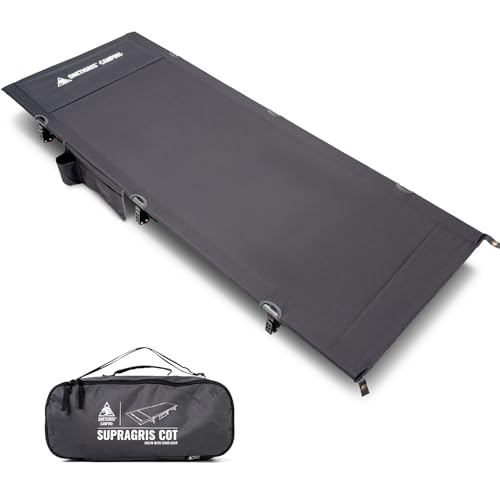
- 27.5-inch-wide sleeping surface
- Supports up to 396 pounds
- Side pockets and pillow pocket
Best For: Larger backpackers wanting extra sleeping width
Best Extra-Wide Quick-Setup Cot

- 31.5-inch-wide sleeping surface
- Sets up in about 60 seconds
- Supports up to 350 pounds
Best For: Side sleepers seeking fast setup and extra room
Best Elevated Steel-Frame Cot

- Supports up to 120 kilograms
- Durable 600D polyester surface
- Tool-free folding design
Best For: Car camping and guest use where weight is less critical
Best Ultralight Trail Cot

- Weighs about 4.8 pounds
- Packs into a compact stuff sack
- Supports up to 275 pounds
Best For: Backpackers prioritizing low carry weight and packability
Best Adjustable Cot
MOON LENCE Height-Adjustable Camping Cot

- Dual-height design for tents or wet ground
- 330-pound capacity with 7075 aluminum frame
- Extra-wide surface with storage pockets
Best For: Campers prioritizing adjustable height and sleeping space
Best Full-Size Support
MIKKUPPA Heavy-Duty Backpacking Cot

- 77.2-inch full-size sleeping surface
- 350-pound capacity with 800D Oxford fabric
- Includes inflatable pillow and storage pockets
Best For: Adults wanting roomy, high-capacity camping support
Best Ultralight Pick
Naturehike Ultralight Camping Cot

- Only 4.8 pounds with compact carry size
- 330-pound capacity and five support legs
- Quick one-minute setup for tent use
Best For: Hikers minimizing pack weight and bulk
Best Lightweight Value
Sutekus Ultralight Backpacking Cot

- 4.7-pound cot supports up to 330 pounds
- Folds to 7 by 14 inches
- Ten contact points improve stability
Best For: Backpackers wanting a compact, elevated cot
Best Fast-Setup Pick
Naturehike GreenWild Backpacking Cot

- 60-second setup and take-down
- 7075 aluminum frame supports 330 pounds
- Five legs add stability on uneven ground
Best For: Campers prioritizing quick setup and stable support
Best Compact Comfort Option
Sutekus Portable Backpacking Cot

- 4.7-pound aluminum cot supports 330 pounds
- Folds to 7 by 14 inches
- Includes side pocket and storage bag
Best For: Hikers wanting a compact cot with convenient storage
Best Wide Lightweight Cot – ONETIGRIS SUPRAGRIS
For campers who want more room without giving up portability, the ONETIGRIS SUPRAGRIS is a strong option among camping cots for backpacking. Its 27.5-inch width, 5.7-pound weight, and 396-pound capacity make it suitable for larger sleepers, while the included stuff sack supports transport.
Best For: Backpackers and campers who prioritize extra width, high weight capacity, and useful storage features.
Pros:
- Extra-wide 74.8-by-27.5-inch sleeping surface
- 7075 aluminum frame supports up to 396 pounds
- Water-, dirt-, and scratch-resistant 300D Oxford fabric
- Integrated side pockets and pillow pocket keep essentials nearby
Cons:
- At 5.7 pounds, it is not the lightest cot in this roundup
- Assembly is required
The SUPRAGRIS balances a roomy sleeping area with a manageable packed weight. It is especially compelling when comfort and capacity matter more than carrying the absolute lightest shelter system.
Best Extra-Wide Quick-Setup Cot – Gonex 31-Inch Camping Cot
The Gonex combines an extra-wide sleeping area with a fast setup system, making it a practical pick among camping cots for backpacking. Its 31.5-inch bed, 5.5-pound listed weight, and three-step lever-locking assembly suit campers who want room and convenience.
Best For: Side sleepers and campers who want an especially wide cot with quick, tool-free setup.
Pros:
- 31.5-inch-wide sleeping surface offers room to turn over
- 7075 aluminum frame and dual-tube design support up to 350 pounds
- Upgraded lever-locking system sets up in about 60 seconds
- Includes a pillow pocket, side pockets, and tactical hanging systems
Cons:
- The pillow pocket does not include a pillow
- Its extra-wide design may take more room in a tent
With one of the roomiest sleeping surfaces here and a claimed 60-second setup, the Gonex is a comfort-focused choice. It remains reasonably portable at roughly 5.5 pounds and includes a carrying bag.
Best Elevated Steel-Frame Cot – Ultralight 120kg Camping Cot
This folding steel-frame model offers elevated sleeping and a straightforward design for campers comparing camping cots for backpacking. The 600D polyester surface, breathable fabric, and 120-kilogram support rating provide practical outdoor functionality, though its 12.3-pound weight is better suited to car camping or short carries.
Best For: Car campers, festival users, and travelers who want a sturdy elevated bed with simple folding setup.
Pros:
- Supports up to 120 kilograms, or about 265 pounds
- 600D polyester sleeping surface is breathable and durable
- Powder-coated steel frame provides stable elevated support
- Folds without tools for camping or guest use
Cons:
- At 12.3 pounds, it is substantially heavier than the other listed cots
- Its 24.8-inch width is narrower than the extra-wide options
The main tradeoff is portability: this cot offers a conventional steel-frame feel but weighs much more than ultralight backpacking models. Choose it when elevation and folding convenience matter more than pack weight.
Best Ultralight Trail Cot – MARCHWAY Folding Camping Cot
At about 4.8 pounds, the MARCHWAY is the lightest listed option for shoppers seeking camping cots for backpacking. Its aircraft-grade aluminum frame, ripstop nylon fabric, compact 15.7-by-6.9-inch stuff sack, and 275-pound capacity make it well suited to overnight trail trips.
Best For: Backpackers and trekkers who want the lowest listed weight with a compact packed size.
Pros:
- Weighs approximately 4.8 to 4.9 pounds
- Packs into a compact 15.7-by-6.9-inch stuff sack
- Aircraft-grade aluminum frame supports up to 275 pounds
- Five cross rods, wide feet, and ten anti-skid feet help provide stable support
Cons:
- Lower weight capacity than the ONETIGRIS and Gonex models
- Shock-cord pole assembly may require more setup than a lever-lock system
The MARCHWAY is the clearest weight-saving choice in this group. It gives up some maximum capacity, but its compact packed dimensions and lightweight frame are valuable when every pound in a backpack matters.
Best Adjustable Cot – MOON LENCE Height-Adjustable Camping Cot
For campers comparing camping cots for backpacking, the MOON LENCE stands out for its adjustable height and roomy sleeping surface. Its aluminum frame supports up to 330 pounds, while the low setting works well inside tents and the taller setting helps keep you above wet or muddy ground.
Best For: Backpackers who want adjustable clearance, extra width, and built-in storage for varied camping conditions.
Pros:
- Dual-height design offers a 5.9-inch tent-friendly setting and a 15.75-inch elevated setting.
- Supports up to 330 pounds with a 7075 aircraft-aluminum frame and rip-stop, water-resistant 300D Oxford fabric.
- Roomy 74.8-by-27.5-inch surface includes a side pocket, under-cot mesh, and pillow pocket.
- Leverage locking mechanism is designed for setup in about one minute.
Cons:
- At approximately 9.5 pounds, it is heavier than ultralight backpacking cots.
- The taller configuration and extra-wide design may take more packing space.
The MOON LENCE is a comfort-oriented option when adjustability and sleeping space matter more than minimizing pack weight. It is especially practical for car-supported trips, truck camping, or backpacking where a heavier load is acceptable.
Best Full-Size Support – MIKKUPPA Heavy-Duty Backpacking Cot
Among camping cots for backpacking, the MIKKUPPA offers a full-size sleeping area and a high 350-pound capacity. Its 800D Oxford fabric, 7075 aluminum frame, and two height options make it a sturdy choice for adults who want more room than a compact cot typically provides.
Best For: Adults seeking a full-size cot with strong weight support, storage features, and an included inflatable pillow.
Pros:
- 77.2-by-26.8-inch sleeping area accommodates adults up to 6 feet 2 inches.
- Supports up to 350 pounds using 800D Oxford fabric and a 7075 aluminum frame.
- Dual-height design provides 7.09-inch and 15-inch settings.
- Includes an inflatable pillow, pillow pocket, side storage pocket, and carry bag.
Cons:
- At 10 pounds, it is relatively heavy for extended backpacking.
- The three-step assembly requires installing support bars, legs, and brackets.
The MIKKUPPA emphasizes adult-sized comfort and durability rather than ultralight packing. Its included pillow and storage features are useful for longer stays, while the 350-pound capacity gives it a substantial support margin.
Best Ultralight Pick – Naturehike Ultralight Camping Cot
For hikers choosing camping cots for backpacking, the Naturehike Ultralight Cot is the easiest option here to carry. It weighs 4.8 pounds, packs to 18 by 6.3 inches, and uses a 7075 aluminum frame with five support legs for a stable low-profile sleeping platform.
Best For: Backpackers and hikers who want a lightweight, compact cot that can strap to a rucksack.
Pros:
- Weighs only 4.8 pounds and packs into a compact 18-by-6.3-inch carry bag.
- 7075 aluminum construction and five support legs provide support for up to 330 pounds.
- Low 5.9-inch height helps fit inside tents while keeping the sleeper above cold or damp ground.
- Shock-corded assembly is designed to take about one minute.
Cons:
- The fixed low height does not offer the elevated 15-inch setting found on some alternatives.
- Its 25.6-inch width is narrower than the extra-wide MOON LENCE option.
The Naturehike is the clearest choice when pack weight and portability come first. Its compact carry size, low weight, and quick assembly suit hiking-focused trips, though campers wanting elevated clearance or a wider bed may prefer a larger model.
Best Lightweight Value – Sutekus Ultralight Backpacking Cot
If you want camping cots for backpacking that balance a full-length sleeping surface with a manageable packed size, this Sutekus model is a practical option. It weighs 4.7 pounds, supports up to 330 pounds, and folds to 7 by 14 inches for easier pack transport.
Best For: Backpackers and campers who want an elevated, stable cot with a compact folded size.
Pros:
- 75 by 27.5-inch sleeping surface with a 330-pound capacity.
- Ten ground contact points help distribute weight for stability.
- Includes a side pocket and folds into its storage bag in about 10 seconds after disassembly.
Cons:
- Inserting the brackets into the slots requires extra effort.
- At 4.7 pounds, it may be heavier than minimalist backpacking sleep systems.
The off-ground design helps separate you from hard or wet ground, while the aluminum frame and quiet sleeping surface add practical comfort. It is a strong fit when packability matters but you still want a generously sized cot.
Best Fast-Setup Pick – Naturehike GreenWild Backpacking Cot
For camping cots for backpacking, the Naturehike GreenWild stands out when quick setup and stable support are priorities. Its aircraft-grade 7075 aluminum frame weighs 4.8 pounds, supports up to 330 pounds, and packs into an 18 by 6.3-inch carry bag.
Best For: Campers who value a fast setup, supportive five-leg design, and moisture-blocking fabric.
Pros:
- Sets up and packs down in about 60 seconds.
- Five legs with anti-slip stabilizers support a flat, stable sleeping platform.
- Breathable, tear-resistant 300D Oxford fabric helps reduce contact with cold, rough ground.
Cons:
- The 18-inch packed length is longer than some compact cot designs.
- At 4.8 pounds, it adds a noticeable load to a backpack.
Shock-corded support tubes simplify assembly, and the design is intended to stay quiet when you move. Choose this model if a reliable one-minute setup is more important than having the shortest possible packed length.
Best Compact Comfort Option – Sutekus Portable Backpacking Cot
This Sutekus cot is a useful choice among camping cots for backpacking when you want an elevated bed without tools or a complicated frame. It weighs 4.7 pounds, supports up to 330 pounds, and folds to 7 by 14 inches for carrying in a backpack.
Best For: Hikers and travelers seeking a stable, full-length cot with a small packed footprint and storage pocket.
Pros:
- 74.4 by 25.4-inch cot surface with a 330-pound capacity.
- Ten ground contact points are designed to distribute weight evenly.
- Tool-free assembly, included storage bag, and side pocket for small essentials.
Cons:
- Bracket insertion takes extra effort during assembly.
- The 4.7-pound weight may be substantial for ultralight trips.
The raised design helps keep you away from wet or hard ground, and the supplied notes describe the cot as quiet without creaking or sinking. Its compact fold and practical pocket make it versatile for hiking, travel, and occasional indoor use.
How We Picked the Best Camping Cots for Backpacking
We focused on the features that matter most when a cot has to travel: overall weight, folded size, stated weight capacity, setup design, portability, and likely sleeping comfort. We also considered useful differences among the models, including wider frames, adjustable height options, compact folding systems, and higher load ratings.
Product specifications can vary by size and seller, so verify the current dimensions, packed weight, included components, and capacity before buying. A cot’s listed maximum load is not the same as a recommendation for every sleeper, particularly when gear is stored on the frame.
Quick Comparison
| What to Compare | Why It Matters |
|---|---|
| Pack weight | Every extra pound affects long hikes and multi-day trips. |
| Packed size | Determines whether the cot fits inside your pack or must be strapped outside. |
| Weight capacity | Should comfortably exceed your body weight and any gear placed on the cot. |
| Width and length | Influence sleeping position, shoulder room, and overnight comfort. |
| Frame and setup | Simple, secure assembly is valuable when arriving after dark or in poor weather. |
Key Buying Factors for Camping Cots for Backpacking
Weight and Packed Size
For true backpacking, prioritize the lightest model that still provides adequate support and usable dimensions. Check the complete packed weight, including poles, legs, fabric, carry bag, and any connectors. A compact bundle is easier to organize than a cot with long, rigid parts.
Support and Stability
Choose a stated capacity with a meaningful safety margin. Aluminum-style folding frames and multiple support points can provide a stable sleeping platform, but inspect the leg locks and joints before each trip. A cot should sit level without rocking on firm ground.
Comfort and Ground Clearance
Wider cots are generally more comfortable for side sleepers, while taller designs make it easier to sit down and get up. More clearance can improve airflow and keep you away from moisture, but it may add weight and bulk. Remember that many cots require a separate sleeping pad for insulation and cushioning.
Setup and Durability
Look for clear assembly steps, reinforced fabric, and a frame that does not require excessive force. Practice setup at home. This helps reveal tight connections and prevents fabric or poles from being damaged on the first trip.
Who Should Buy Which Camping Cots for Backpacking?
- Ultralight backpackers: Choose the smallest, lightest cot that meets your length and capacity needs.
- Taller or broader sleepers: Favor a longer or wider design, even if it adds some pack weight.
- Heavier campers: Select a model with a high stated capacity and a sturdy frame, with room for a safety margin.
- Campers who dislike low beds: Consider a height-adjustable or elevated cot for easier entry and exit.
- Occasional travelers: A straightforward folding cot can be a practical choice for car camping, travel, and guest use as well as shorter hikes.
Before heading out, confirm the cot fits your shelter, test it on uneven ground, and pair it with an insulated sleeping pad appropriate for the expected temperatures.